

For brands evaluating mall retail for the first time, lease length is often the first question that determines whether the conversation goes further. The commitment attached to a traditional commercial lease — typically three to ten years for inline retail — is enough to stop many emerging and growing brands before they explore what else might be available.
The honest answer is that commercial leases can be significantly shorter than most people assume. How short depends on the format, the property, and what you are actually trying to accomplish.
The Range in Practice
At the longest end, standard inline commercial leases in mall retail typically run three to ten years. These are the agreements most people associate with renting a store — long-term commitments with defined renewal options, complex lease structures, and meaningful financial obligations on both sides.
At the shortest end, GGP's specialty leasing arrangements can run as little as a single day. A weekend pop-up, a holiday activation, or a makers market table can be structured as a short-term license agreement for a defined number of days or weeks. These are not traditional commercial leases in the legal sense — they are license agreements — but they represent genuine commercial arrangements that give brands access to mall environments with minimal commitment.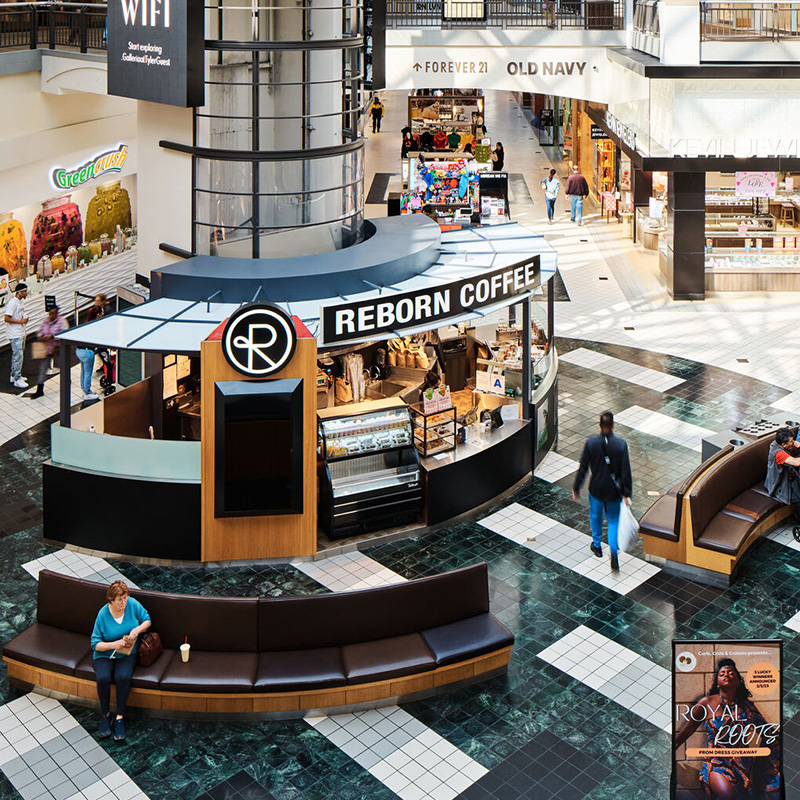
Between those two poles, a range of formats and term lengths exist. Month-to-month specialty leases and quarterly arrangements are common for temporary pop-ups and mobile carts within mall specialty leasing programs. However, for structural mall kiosks, lease terms typically require a longer operational commitment, typically starting at a minimum of 18 months. Meanwhile, temporary inline spaces — enclosed storefronts leased on a short-term basis — generally run from one month up to one year depending on availability and the property's occupancy situation.
The Difference Between a Lease and a License Agreement
Understanding this distinction matters when evaluating short-term options. A commercial lease is a legal agreement that grants the tenant exclusive possession of a defined space for a specified term. It carries significant legal protections for both parties and typically involves more complex negotiation and documentation.
A license agreement, which governs most short-term specialty retail arrangements including carts, kiosks, and pop-ups, grants the right to use a space under defined conditions without conferring the same legal possession rights as a lease. License agreements are simpler and faster to execute, but they also provide fewer protections. The property retains more control over the arrangement, and termination provisions tend to favor the licensor.
For brands evaluating very short-term mall activations, this means understanding that the flexibility of a short-term arrangement comes with a corresponding reduction in legal protection and negotiating leverage. That trade-off is often entirely appropriate for the stage and objective of the activation. It is simply worth understanding before you sign.
To learn more about tricky lease lingo, our retail glossary outlines many terms that you should know when going into this process.
What Drives Minimum Term Length
Not every property offers every term length for every format. Several factors influence how short a lease or license agreement a given mall will offer.
Format type. The physical nature of the retail asset dictates its minimum lease commitments. Pop-ups and RMUs (Retail Merchandising Units — pre-fabricated, mobile common-area structures) offer the maximum short-term flexibility, with commitments ranging from a single weekend up to a year. Conversely, common-area kiosks require extensive structural customization, specialized design approvals, and utility hookups, meaning they typically require a minimum lease commitment of 12 to 18+ months. Temporary inline spaces, however, offer surprising flexibility depending on the layout of the space; these enclosed storefronts frequently accommodate highly agile leases spanning anywhere from 1 to 13 months. Some temporary inline locations are completely move-in ready with existing fixtures, while others are provided as a blank canvas "white box" depending on your brand's operational needs.
Property demand. In high-demand properties with strong occupancy, specialty leasing availability may be limited and minimum terms may be longer than at properties with more inventory to fill. Conversely, properties actively seeking to animate vacant space may offer more flexible arrangements to the right concept.
Seasonality. Holiday and peak shopping periods create both opportunity and constraint. Short-term activations during peak periods are common, but availability fills quickly and pricing reflects the premium nature of those windows. Off-peak periods often offer more flexibility on both term length and cost.
Concept fit. A brand with a compelling concept and a demonstrated retail track record has more room to negotiate term length and conditions than a first-time operator with an untested concept. Leasing teams balance flexibility against risk, and a stronger application creates more room for flexibility.
The Trade-Offs of Shorter Terms
Shorter terms offer flexibility but rarely at no cost. Understanding the trade-offs helps you choose the right term length for your situation rather than simply defaulting to the shortest option available.
Very short terms limit your ability to build customer familiarity with your location. Repeat visits and word-of-mouth — both meaningful drivers of mall retail performance — take time to develop. A two-week activation may generate useful market data, but it is unlikely to produce the kind of sustained customer relationship that converts into long-term brand value.
Short terms also typically carry a higher effective cost rate than longer commitments. The flexibility premium is real and reflects the genuine operational trade-off the property is accepting by keeping the space available for shorter-term use. If your financial model depends on minimizing cost per day or per week, a slightly longer commitment may actually serve you better.
Finally, very short arrangements limit the negotiating surface available to you. Co-tenancy protections, renewal rights, and tenant improvement contributions — all meaningful for longer-term performance — are generally not available in short-term license structures.
Choosing the Right Term for Your Situation
The right lease or license length is not the shortest one available. It is the one that matches your objective, your operational readiness, and the data you are trying to gather.
A brand validating demand in a new market for the first time may be well served by a one to three month GGP specialty lease that provides enough time to generate meaningful performance data without overcommitting. A brand running a seasonal campaign may need only a defined holiday window. A brand using a kiosk as a transitional step toward inline retail may benefit from a longer specialty term that allows time to build customer recognition before making that move.
The question worth asking before you negotiate term length is not how short can this be, but how long does this need to be to accomplish what I am actually here to do.
For even more details, read our article "Short-Term Commercial Leases: What Retail Brands Need to Know Before Signing."
Last Updated: August 11, 2026