

Short-term leasing is an important stepping stone and a strategic tool for businesses at every stage of growth. Whether you are a digitally native brand testing physical retail for the first time, a scaling business entering a new market, or an established retailer running a seasonal campaign, a short-term lease gives you the flexibility to grow your business on your terms — without the long-term commitment of a traditional lease.
While our article, How to Rent Space in a Mall: A Complete Guide for Retail Brands, gives a larger overview, this piece covers what short-term leasing actually involves, which formats exist within it, when it makes the most strategic sense for your brand, and what to review carefully before you sign.
What Qualifies as a Short-Term Commercial Lease
There is no universal legal definition, but the working convention in mall retail is that a short-term lease covers any arrangement under twelve months. In practice, terms can run considerably shorter — from a single day for an open-air event activation up to a year for a temporary inline space—depending on the format and the property.
It's worth noting that many short-term mall retail arrangements are governed by a license agreement rather than a traditional commercial lease — but both agreements are binding. A license grants you the right to occupy and use a defined space under specific conditions. If you have any questions or concerns about the terms, you can contact a GGP specialty leasing representative, as they are the right resource to walk you through them.
That difference has practical consequences around renewal rights, exclusivity, and what happens if either party wants to exit early. Understanding which document governs your arrangement — and what that means for your position — is the starting point for any short-term leasing evaluation.
A standard commercial lease, by contrast, typically runs three to ten years, involves more complex negotiation, and includes provisions like co-tenancy protections and tenant improvement allowances that are generally unavailable in short-term arrangements. For brands considering what a longer-term commitment would involve, the supporting article on normal commercial lease structures covers that in full detail.
Short-Term Format Options in Mall Retail
When navigating a short-term commercial lease within the shopping center space, these agreements are often referred to more specifically as a short-term retail lease. In the mall world, short-term options are frequently called specialty leasing. GGP officially categorizes these flexible footprints under their specialty leasing division, which directly connects to their dedicated properties and platform resources.
Within a GGP shopping center, a temporary specialty leasing footprint can take several distinct physical forms, each designed to meet brands at a different stage of growth and readiness:
Pop-up shops and makers market tables. These offer lease terms ranging from a single day to a few months, making them the most agile entry point in GGP's specialty leasing portfolio. They are particularly well-suited for product launches, market testing, seasonal campaigns, and brand activations. Overhead is lower than permanent inline space, and setup is fast. Many of these opportunities are open-air footprints or dedicated tables positioned directly within high-traffic common-area zones. Because these formats rely on strong foot traffic and compelling in-person presentation, working closely with the GGP specialty leasing team on placement and timing is the best way to set your activation up for strong performance from day one.
Carts / RMUs (Retail Merchandising Units). An RMU — Retail Merchandising Unit — is a pre-fabricated, mobile common-area structure provided directly to the tenant, meaning zero build-out time and immediate access to high-footfall corridors. This format is an agile, hyper-focused entry point that maximizes direct-to-consumer interaction with minimal operational overhead. Pricing is sensitive to seasonality, with peak shopping periods carrying a premium. Particularly well-suited to single-product or limited-SKU brands, local artisans, and emerging concepts that want to test demand, read their customer in real time, and operate with lean efficiency before scaling into a larger GGP specialty leasing format.
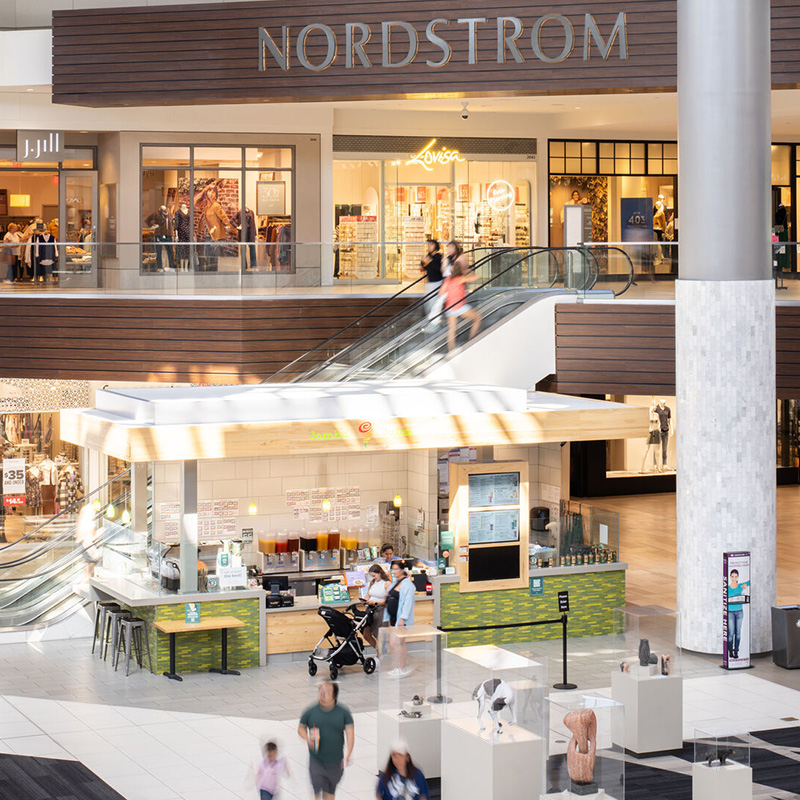
Kiosks. These are larger, custom-designed structures permanently positioned within the common areas of a GGP shopping center. Unlike the highly flexible cart and RMU format, common-area kiosks feature a dedicated physical footprint, greater merchandising capacity, and frequently include dedicated utilities such as plumbing or data lines. Because kiosks involve specific structural design approvals and property customization, they represent a meaningful operational investment — and the results reflect that. GGP kiosks typically require a minimum lease term of 18 months or longer, giving your brand the runway to build customer recognition and maximize the return on your build-out.
Short-term inline spaces. These are enclosed retail spaces available on temporary lease terms, typically when permanent tenants are between commitments. Closest in experience to a standard store, these enclosed storefronts frequently accommodate highly agile leases spanning anywhere from 1 to 13 months. Temporary inline spaces may already feature built-in retail fixtures and decor left behind by the previous tenant that you can immediately utilize — making them one of the fastest-to-launch formats in GGP's specialty leasing portfolio. As you can imagine, inventory at the most desirable and in-demand GGP locations fills quickly.
You can learn more about each of these mall retail options in our store formats guide, however reaching out to the GGP specialty leasing team early is the best way to secure availability and find the right fit for your concept before peak windows close.
When Short-Term Leasing Makes Strategic Sense — And When a Longer Commitment May Serve You Better
Most content on short-term leasing covers the benefits. What is equally worth understanding is where a longer-term commitment would actually serve your brand better — and how to use a short-term activation to build toward that, regardless of your category.
Short-term leasing makes strategic sense when:
The objective is market validation before a long-term commitment — testing demand, customer fit, and operational viability in a specific location
Your revenue profile is seasonal or campaign-driven and does not require year-round presence
You are a digital-native brand entering physical retail for the first time, limiting fixed cost exposure while building operational competency
You are a scaling brand evaluating a new geography before committing to a permanent footprint
You are building an omnichannel loop — a short-term footprint triggers in-person discovery that drives high-lifetime-value digital traffic long after the lease ends
For categories that rely heavily on repeat purchase habits, the preparation work involves using the short-term lease as an intentional customer acquisition engine — channeling the foot traffic and discovery from your GGP activation directly into your digital or long-term ecosystem. A well-executed specialty leasing activation does not just generate revenue during the term; it builds the audience you sell to long after it ends.
What to Review Before Signing
While short-term arrangements are more streamlined than long-term leases, both are binding agreements. Taking the time to review key terms carefully — and asking your GGP specialty leasing representative about anything unclear — is what separates a smooth activation from an avoidable complication.
Before signing any short-term commercial lease or license agreement with GGP, review these key items:
Which document type governs the arrangement — a lease or a license — and what protections differ between the two
The full scope of cost obligations beyond base rent, including utilities, insurance requirements, marketing fund contributions, and any common area charges
Whether the landlord has any obligation to extend the arrangement and on what terms renewal pricing would be calculated
Whether the agreement includes any exclusivity provisions preventing the property from placing a directly competing brand in adjacent space during your term
The conditions under which either party can exit early and what financial exposure that creates
What modifications to the space are permitted and what restoration obligations apply at the end of the term
GGP's lease checklist covers these points in practical detail and is worth reviewing before any lease conversation reaches the documentation stage.
Choosing the Right Format for Your Business Stage
If your primary remaining question is financial — what short-term formats cost and what drives that cost — our related content on commercial space pricing covers the full breakdown. If you are still earlier in the evaluation process and working through the broader question of how mall leasing works, our complete guide to renting space in a mall is a great place to start.
The format you choose should follow from a clear answer to what you are actually trying to accomplish. GGP's specialty leasing team is the right partner to help you work through that question — and to connect your brand with the format, the property, and the lease structure that sets you up for the outcome you are building toward.
Last Updated: August 11, 2026