

Renting a cart at the mall is one of the most accessible entry points into physical retail. The footprint is small, the commitment is shorter than a traditional lease, and the overhead is lower than operating a full storefront. For the right brand, it is also one of the most effective ways to test demand before making a larger investment, as further outlined in our article, How to Rent Space in a Mall: A Complete Guide for Retail Brands.
But accessible does not mean simple. There are real decisions to make before you sign anything — about format fit, placement, cost structure, and operational readiness. Getting those decisions right early determines whether a mall cart becomes a profitable proving ground or an expensive lesson.
What a Mall Cart Actually Is
A mall cart, sometimes called a Retail Merchandising Unit or RMU, is a freestanding retail structure positioned in the common areas of a GGP shopping center. Unlike inline stores, carts sit in open corridors rather than enclosed spaces. That openness is both the format's biggest advantage and its primary constraint.
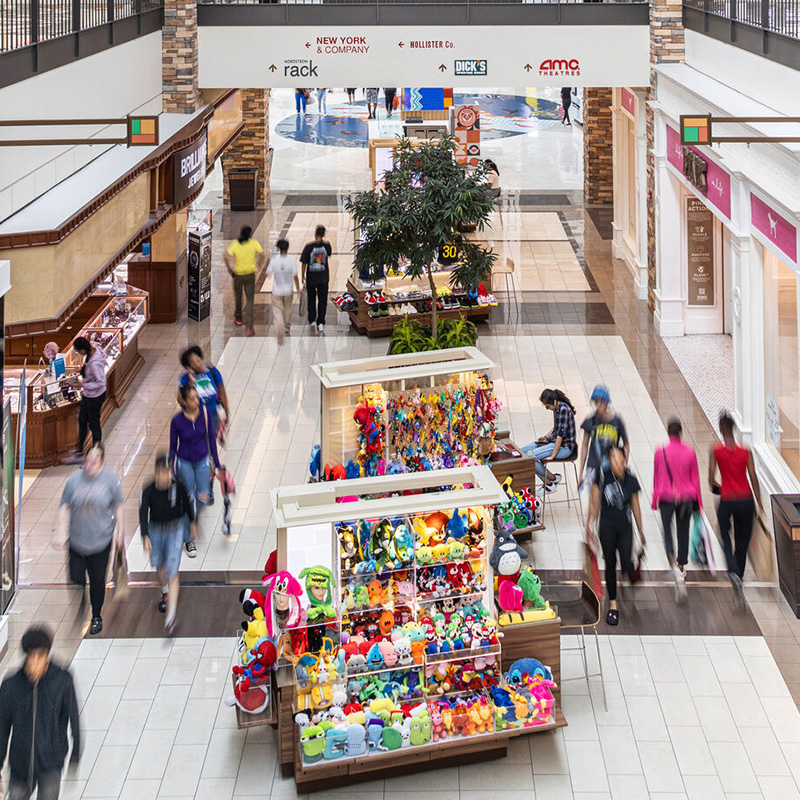
Carts offer 360-degree visibility. Shoppers can approach from any direction, which makes the format well-suited to impulse-driven categories and products that benefit from immediate visual appeal (check out some cart examples to see them in action) . What carts cannot offer is the enclosed brand environment of a storefront, the storage depth of a full retail space, or the kind of consultative selling experience that certain product categories require.
Understanding that trade-off is the starting point for any honest evaluation of whether this format fits your business.
Which Brands Are Best Suited to a Cart
Cart retail works best when the product can sell itself quickly. The format rewards simplicity — a focused product range, a clear value proposition, and a customer who can make a purchase decision without extensive explanation.
Categories that tend to perform well include jewelry, accessories, beauty and skincare, specialty food and beverage, and seasonal or novelty items. What these categories share is a relatively limited SKU count, strong visual merchandising potential, and purchase behavior that does not require significant dwell time.
Though many products and services can work on a cart, brands that have large inventory requirements, rely on complex product demonstrations, or need an enclosed brand environment may want to consider a kiosk or temporary inline space instead. If your brand story needs space to breathe, a cart will constrain it.
How the Rental Process Works
The process for renting a mall cart runs through the property's specialty leasing team rather than its standard leasing department. Specialty leasing handles short-term and flexible formats, including carts, kiosks, and pop-up spaces.
The general sequence looks like this:
You contact the specialty leasing team at the mall or malls you are evaluating. You describe your concept, your product category, and your operational timeline. The leasing team will assess whether your concept fits the available inventory and the existing tenant mix at that property.
If there is a fit, you will receive a license agreement rather than a traditional lease. This is an important distinction. A license agreement governs most short-term specialty retail arrangements and carries different legal protections than a standard commercial lease. Before signing, understand what the agreement covers in terms of term length, renewal options, permitted use, and any exclusivity provisions around competing concepts.
Cost will vary based on the property, the specific placement within the mall, the term length, and the time of year. Peak periods, including the holiday season, typically carry higher rates. In addition to the base rental fee, confirm what other costs apply — utilities, insurance, and marketing fund contributions are common additions that can affect your total occupancy cost.
Placement Matters More Than Most Brands Expect
Not all cart locations within a GGP mall perform equally. A cart positioned near a major anchor tenant or in a high-dwell area — near a food hall, entertainment zone, or experiential activation — will typically generate more traffic than one placed in a lower-footfall corridor, even within the same property.
When evaluating available placements, ask the specialty leasing team about foot traffic patterns at that specific location, not just the mall overall. Understand which anchor stores and experiential zones draw traffic to the area where your cart would be placed. The difference between a strong placement and a weak one can meaningfully affect your results.
What to Prepare Before You Reach Out
Specialty leasing teams move faster when prospective tenants come prepared. Before you contact a property, have a clear answer to the following: What is your product? Who is your customer? Do you have any photos of your product or service that you can share? Do you have any existing retail or pop-up experience? What is your proposed timeline?
If you have sales data from previous retail activations, bring it. It gives the leasing team confidence in your concept and can strengthen your position when discussing placement and terms. You can reach GGP's specialty leasing team directly through our contact form.
Using a Cart as a Strategic Starting Point
The brands that get the most out of a GGP mall cart treat it as a proof-of-concept phase, not a permanent operating model. A well-executed cart gives you real data on conversion rates, average transaction values, customer demographics, and product performance in a physical environment — all before committing to a larger footprint.
Many brands use that data to make a more informed decision about whether to scale into a kiosk, a temporary inline space, or a long-term store. The cart may not be your final destination — but it is one of the most cost-effective ways to discover what the right next step looks like.
Last Updated: August 11, 2026