

According to our article, How to Rent Space in a Mall: A Complete Guide for Retail Brands, a mall kiosk sits in a different strategic position than most short-term retail formats. It is larger and more permanent-feeling than a cart, and can be more visible than a temporary inline space, and more operationally manageable than a full storefront. For brands at the right stage, it offers a meaningful combination of brand presence, foot traffic access, and flexibility that is difficult to replicate elsewhere.
Getting there requires understanding how the process works, what the format demands, and where brands most commonly miscalculate.
How a Kiosk Differs from Other Mall Formats
Kiosks are enclosed or semi-enclosed freestanding structures, typically positioned in high-traffic common areas such as center court, main corridors, or zones near anchor tenants. These formats offer incredible structural flexibility; they can be rented as pre-fabricated, landlord-provided units for a quick setup, or fully custom-designed to match a brand's precise look and feel. Unlike carts, which are smaller and more mobile, kiosks offer a defined retail footprint with greater merchandising capacity and stronger brand presence.
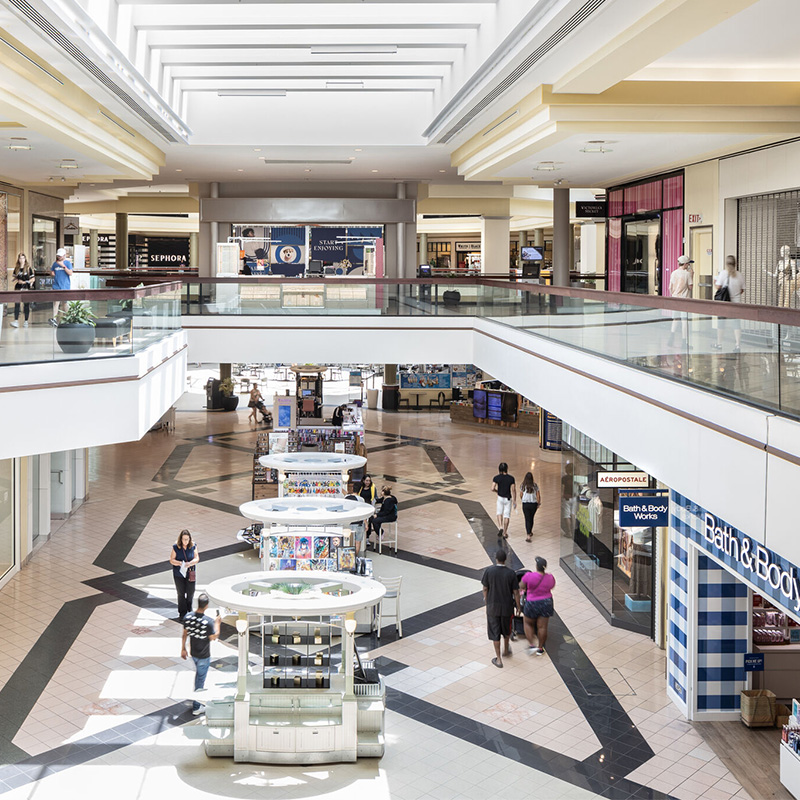
That distinction matters operationally. A kiosk allows for more product depth, more deliberate visual merchandising, and a more structured customer interaction than an open cart permits. Crucially, many modern kiosk units possess the structural capability to house integrated utilities like plumbing, specialized electrical lines, kitchens, ovens, and sinks. This makes them an exceptional specialty leasing option for hands-on businesses like beauty treatments and food concepts. However, it also requires more investment — in design, fixtures, and staffing — than a cart does.
The trade-off is that a kiosk still cannot replicate the enclosed environment of an inline store. There is no large back-of-house storage, no controlled customer journey, and no ability to create the kind of immersive brand experience a full storefront enables. Brands that need those things should be evaluating inline space, not a kiosk.
Which Brands Are Well-Suited to a Kiosk
Kiosks perform best for brands with a focused product range and strong visual appeal. The format rewards clarity — a product that communicates its value quickly, a customer who can make a decision without a lengthy consultation, and a merchandising approach that works in an open, high-traffic environment.
While many products and services can work in a kiosk, categories that consistently perform particularly well include beauty and skincare, accessories, jewelry, specialty wellness products, and food concepts, as well as demonstration-driven items where the product sells itself through interaction. Digital-native brands entering physical retail for the first time also find kiosks useful — the format offers real customer contact and sales data without the operational complexity of a full store.
Brands that are less suited to a kiosk include those with large inventory requirements, high-consideration purchase categories, or a customer experience that depends on privacy or an enclosed space.
How the Rental Process Works
Kiosk leasing runs through the specialty leasing department — or kiosk leasing team — at each GGP mall property, not the standard commercial leasing team. These leasing teams manage short-term and flexible formats including kiosks, carts, and pop-up spaces.
The process generally follows this sequence. You contact the specialty leasing team at the property or properties you are evaluating. You present your concept, your product category, your proposed footprint, and your target timeline. The team will assess fit against the available inventory and the existing tenant mix at that property. Malls actively manage category balance in their tenant ecosystems, so concept fit matters as much as availability.
If the concept is approved, you will typically enter into a license agreement rather than a standard commercial lease. This distinction has legal implications. A license agreement governs most specialty retail arrangements and provides different protections than a traditional lease. Before signing, review the term length, renewal provisions, permitted use, any restrictions on competing concepts nearby, and your obligations around design and restoration at the end of the term.
Kiosk Design and Build-Out
One of the key benefits of a kiosk is the design and personalization flexibility it offers compared to other small-format store types. You have the ability to fully customize your kiosk to reflect your brand identity. With that flexibility comes an investment — but it is one that pays dividends in brand presence and customer conversion.
When leasing a kiosk, you typically have two options: modify an existing structure provided by the property or build a custom design tailored to your brand. Custom designs offer stronger brand differentiation but require more lead time and investment. Existing structures are faster to execute but may limit how distinctively your brand presents.
Whichever route you take, the design should be built around your target customer, your product type, and the specific location within the mall. What works in a center court position may not work in a corridor placement, and vice versa.
If you’d like to see how other brands have designed their kiosks, check out some kiosk examples from GGP’s portfolio.
Placement and What It Determines
Where your kiosk sits within the mall has a direct effect on performance. High-dwell areas — near food courts, entertainment zones, or major anchor tenants — generate different traffic patterns than primary corridors, and different again from secondary walkways.
When evaluating placement options, ask the specialty leasing team specifically about foot traffic patterns, the brands and anchors drawing customers to that zone, and whether your product category aligns with the shopping intent of that area. Volume alone is not a reliable indicator. A kiosk placed in a high-volume but low-intent corridor will often underperform one in a lower-volume but highly aligned zone.
What to Have Ready Before You Reach Out
Specialty leasing conversations move faster when you arrive prepared. Before contacting a property, be ready to clearly describe your product, your target customer, your proposed kiosk footprint, any relevant sales history from previous retail activations, and your preferred timeline.
If you have operated a cart or pop-up previously, that experience is worth mentioning. It signals operational readiness, which is a genuine consideration for leasing teams evaluating short-term tenant candidates. You can reach GGP's specialty leasing team directly through our contact form.
The Kiosk as a Step in a Larger Strategy
The most effective use of a kiosk is as a structured proof-of-concept phase. The data you gather — conversion rates, average transaction values, peak traffic periods, customer demographics — informs every decision that follows, including whether to expand within the same property, enter additional markets, or transition into a longer-term inline format.
Many brands find that a GGP kiosk becomes the foundation of a long-term retail strategy — some stay and grow within the kiosk format, expanding into additional properties; others use it as a stepping stone to a larger inline footprint. The data you gather during your activation informs that decision, whichever direction is right for your business.
Last Updated: August 11, 2026