

As mentioned in our article, How to Rent Space in a Mall: A Complete Guide for Retail Brands, renting an inline store in a mall is a different decision than entering through GGP's specialty leasing program with a kiosk, cart, or pop-up. The commitment is longer, the investment is larger, and the operational requirements are more demanding. For brands that are ready, it is also the format that offers the strongest foundation for sustained retail performance — consistent brand presence, a controlled customer environment, and the kind of co-tenancy and foot traffic dynamics that drive long-term sales.
Getting there requires understanding what the process actually involves, what landlords are evaluating when they assess your application, and where first-time inline tenants most commonly run into problems.
What Inline Retail Space Is
An inline store is an enclosed retail space along the primary corridor of a shopping center. It is what most people picture when they think of a mall store — a defined square footage, a storefront entrance, and a physical environment you design and operate as your own.
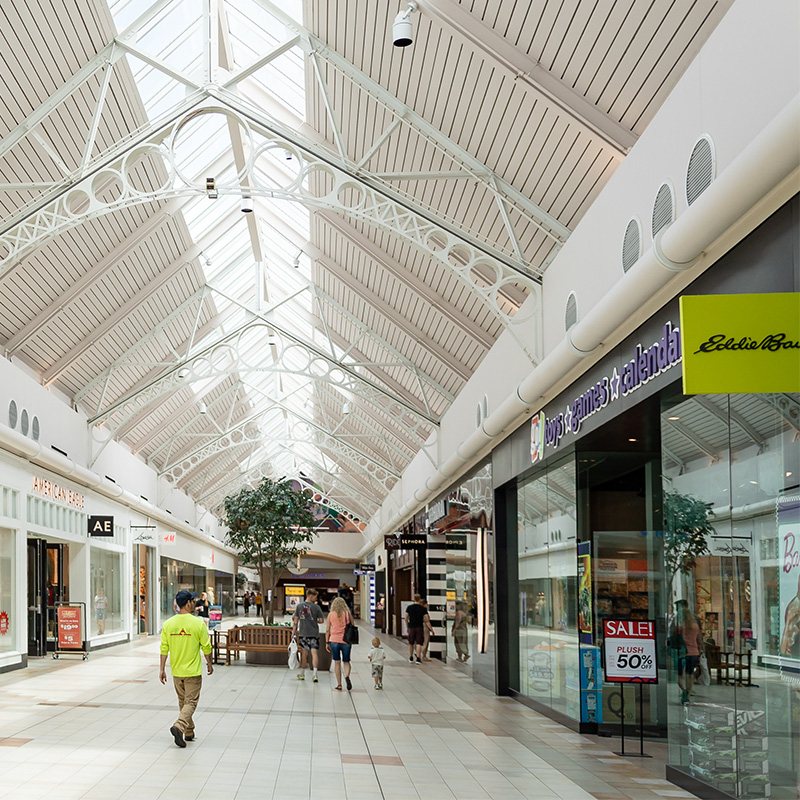
Inline stores vary significantly in size, position within the mall, and the level of foot traffic they receive. A space near a major anchor tenant in a high-performing GGP center carries different economics and different expectations than a secondary corridor location in a smaller market. Understanding those differences is part of the evaluation process, not something to figure out after signing. If you are not yet ready for a full long-term inline commitment, GGP also offers temporary inline spaces — see the section below.
Not Ready for a Long-Term Commitment? Temporary Inline Space May Be the Answer
If the idea of a full inline store feels like a big leap, it is worth knowing that GGP also offers temporary inline spaces — enclosed storefronts available on shorter-term lease arrangements, typically ranging from one to thirteen months. These are real inline retail environments, not cart or kiosk formats, giving your brand the full storefront experience without the multi-year commitment of a traditional lease.
Temporary inline spaces are available when permanent tenants are between commitments, and they sometimes come with existing fixtures and decor left behind by the previous tenant — meaning you can be operational faster than a traditional build-out would allow. As you can imagine, inventory at the most desirable GGP locations fills quickly, so reaching out to the GGP specialty leasing team early is the best way to find out what is currently available at your target property.
For brands that have validated demand through a cart or kiosk and are ready to experience the full inline environment before committing long-term, temporary inline space is one of the most strategic next steps available within GGP's specialty leasing portfolio. Many brands use a temporary inline activation as the final proof point before signing a multi-year lease — and it is a path GGP actively supports.
What Landlords Are Looking For
GGP is curating a tenant ecosystem, not simply filling vacant space. When you approach a leasing team about an inline store, you are entering a selection process as much as a negotiation.
Leasing teams will typically evaluate your concept against several criteria: the strength and relevance of your brand within their existing tenant mix, your financial profile and ability to sustain the lease obligations, your operational history and retail experience, and whether your customer base aligns with the trade area demographics of that specific property.
For emerging brands without an extensive retail track record, this is where preparation matters most. A well-articulated business case — including your sales history, your target customer profile, your merchandising approach, and your financial projections — can meaningfully improve your position in the evaluation process.
The Leasing Process Step by Step
Identify the right properties. Start with markets where your customer base is present and where the existing tenant mix complements rather than competes with your brand. GGP's portfolio spans community centers, regional malls, and flagship urban properties across the US. The right property for your brand depends on your category, your price point, and your growth stage.
Contact the leasing team. Inline leasing inquiries go to the standard commercial leasing department, not specialty leasing. Make initial contact with a clear summary of your concept, your target footprint in square feet, your preferred market, and your proposed timeline. You can reach GGP's leasing team directly through our contact form.
Present your concept. Be prepared to share a brand overview, financial statements or projections, existing store performance data if applicable, and a clear picture of what you intend to do with the space. The leasing team is assessing risk as much as opportunity. The more clearly you can demonstrate operational and financial readiness, the stronger your position.
Review the lease. If your concept is approved by the leasing team, you will then move forward to the formal leasing stage. Inline leases are standard commercial lease agreements, not license agreements. They are longer-term commitments with more complex terms than a specialty leasing arrangement. Key components include base rent, percentage rent provisions, CAM charges, tenant improvement allowances, lease term and renewal options, co-tenancy clauses, and personal guarantee requirements. Review all of these carefully and engage legal counsel if you are unfamiliar with commercial lease structures.
Build out the space. Once the lease is signed, the build-out process begins. Tenant improvement allowances, where the landlord contributes to fit-out costs, are negotiable and worth pursuing. The timeline between lease signing and opening varies depending on the complexity of the build-out and the condition of the space.
Readiness Signals Worth Assessing Honestly
Being thoughtful about timing is what sets brands up for a strong inline debut. Before pursuing an inline store with GGP, it is worth asking yourself a few honest questions so you can enter the format with confidence.
Do your margins support occupancy costs at the rent levels typical for the markets you are targeting? Do you have the staffing infrastructure to run a physical store consistently? Have you validated product-market fit through earlier retail activations, whether online, through pop-ups, or in other physical formats? Is your inventory depth sufficient to merchandise a full storefront effectively?
Taking the time to build readiness is what sets brands up for a strong inline debut. The ones that move into inline space after validating demand through smaller formats tend to perform considerably better from day one.
What to Have Ready Before You Reach Out
Specialty leasing conversations move faster when you arrive prepared. Before contacting a property, be ready to clearly describe your product, your target customer, your proposed kiosk footprint, any relevant sales history from previous retail activations, and your preferred timeline.
If you have operated a cart or pop-up previously, that experience is worth mentioning. It signals operational readiness, which is a genuine consideration for leasing teams evaluating short-term tenant candidates. You can reach GGP's specialty leasing team directly through our contact form.
Choosing the Right Property
Two malls in the same metro market can perform very differently. The factors that drive that difference go beyond foot traffic volume — they include the quality of the tenant mix, the reinvestment strategy of the property operator, the demographic profile of the trade area, and the long-term trajectory of the asset.
When evaluating properties, look beyond current occupancy rates. Understand what anchors are driving traffic, what the operator's redevelopment plans look like, and how the trade area demographics align with your customer profile. A well-curated tenant ecosystem in a strong trade area will typically support your performance more effectively than a lower-rent location with weaker surrounding brands.
The space itself matters. Check out GGP’s U.S. portfolio of properties via our property search tool. The operator behind a property matters just as much. GGP's leasing representatives can help you identify the right market and property for your brand.
Last Updated: August 11, 2026